Tuesday, September 14, 2010

On their own!!

The Karachi chapter of Architecture for Humanity is working on post-flood assessments, in partnership with the Karachi Relief Fund.

On Sunday, September 5th, the team was surveying a potential site at Fizagat, near Saidu Shaif. They were stunned by what they found. A village that has designed their way out of the floods and into economic recovery.

Chapter leader Mahboob Khan explained, "The SWAT riverbed is over 300m wide at this point, with both sides of the river supporting large populations. During our trip we stumbled across an ingenious series of handmade rafts made from tire tubes and bamboo by local villagers. At least 50 of these rafts were seen crossing the water with a number under construction."

Cameron Sinclair, co-founder of Architecture for Humanity has this to say about the rafts: "This 'found' project is a clear example of a local innovation working without international aid and communities working collaboratively to design a better future. For all the talk on 'design for change' it is those who are on the ground and challenged every day that prove once again that creativity is an instinctive trait in the human ability to survive. For those of us who fund projects it is our role to embrace and support this natural instinct and not crush it with the weight of predetermined international response."
For more about this project, more photos, and to learn about the Open Architecture Network (OAN), please click here.

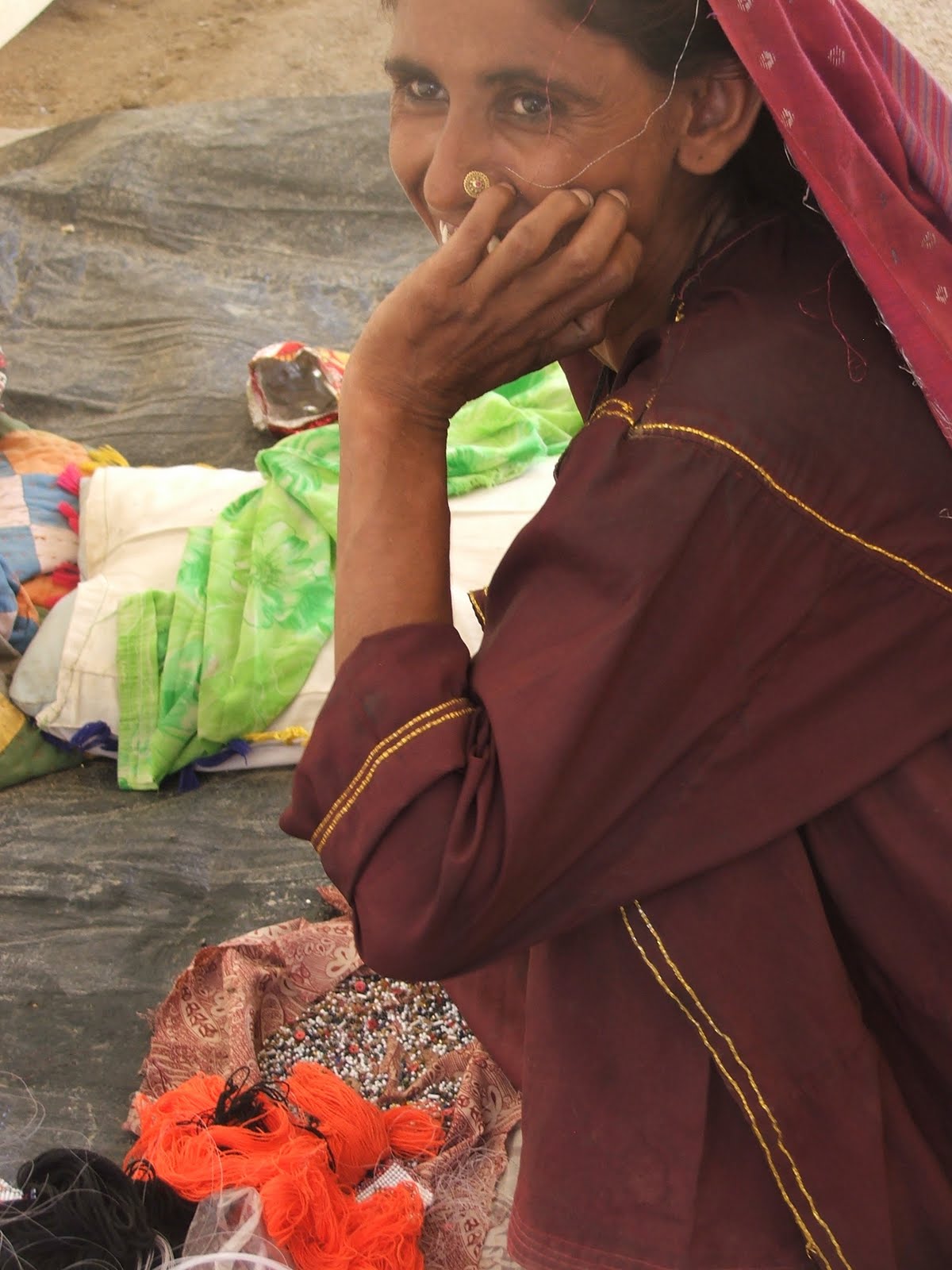
SHER BANO “THE HANDY CRAFTSWOMAN”


• Name: Sher Bano
• Age: In 30s
• Gender: female
• Education: nil (can’t even speak and understand Urdu. Translator was her husband.)
• Marital status: married with four kids ( two boys n two girls)
• Husband’s name: Arbab Ali ( farmer)
• Which city do you belong to?
Dado (khacha ilaqa)

• How long have you been here? How did you got to know about the upcoming flood? How did you get here?
We are here from 10 days in camp. When flood came before we did not knew about it. Than me my husband’s rent a boat on our own and came to dryer place and then we came to Karachi from bus. All this coasts about 3000 Rs/-. Our land lord gave us 6000 rupees when we were coming to Karachi.


• What do you used to do there? Are you educated?
I use to do house hold work and some crafts like karhai, stitching and making rallies for my self and my family.

• What do you miss the most? What was special about your hometown, home?
My elder boy, he is 16yrs old and he is there to look after are cattle’s. We had 8 goats and 3 cows. One of our cows died because of flood. The fresh vegetables are the best thing about our village. My husband was farmer and he use to work for our waderah and brings fresh vegetables every day to cook food.

• How many family members? Are all fine, in good health?
We are 6 family members, me my husband and our four kids. My youngest daughter was having diarrhea and cold. Now she is fine as Dr gave medicine to her.

• What belongings do you still carry from your city? What stuff do u misses the most and cherish the most?
My beads and sewing kit. And our rallis, some clothes and few utensils. My sewing machine and that’s all.

• How do you all spend your day? What do you like the most and not like here at all?
I most of time spend my time in tent doing some work like, making tea and looking at children. Some time I do some beads work as I get bored by sitting idle. I like the medical camp over her. Drs Over here are very good, they really took good care of daughter and workers also. They give us two times cooked food in our tent and also give respect to us. But they don’t give us food for our kids. My youngest daughter can’t eat spice food and we are also not use to it. My husband brings milk and tea and biscuits for our daughter from his own money. Officials didn’t provide cooking facilities I just make take tea by firing woods. Other wise water facilities and medical facilities are good.

• Do you interact with people around you? Is there any sort of groups here?
No I don’t, I can’t speak and understand except Sindhi. But my husband told me that makkarani people made groups over here. As some of the officials are makkarani so they give milk and other stuff to them.

• What have you learnt here? Any new experiences?
To be patient and calm person. Because we are not strong enough to fight with others for relief. So if we have patience we can wait for our turn. We have to wait for food when worker will distribute us? And to use limited amount of water for washing, drinking and bathing.

• What will you do, if you would have to live in Karachi, and if you go back? Will there be any change in your profession?
It depends on time and situation, the only earning member of our family is my husband. If government provides us proper homes we will think to live here. But to me if my husband needs my helping hand I can only do stitching and other karhai stuff.

• You saw how differently people live here at Karachi, the girls and the boys are educated alike, Will you educate your children when you go back?
My children were getting education over there. But it was a government school. I and my husband want our children to good educated citizens of Pakistan. As both of us our totally uneducated we are dependable to our waderah. That’s we don’t for our next generation.

• What role did the govt. play? Do you think you will vote the same people you voted last time?
As we came to Karachi on our own, I think government should provide free transportation facilities. But this camp is also running by govt. and they are doing pretty good job. But mostly NGOs are doing better and efficient work.

• If we provide you any work, will you use your skills to work with us?
Yes I would love to do work with you guys. As I can do handy crafts but I never did at professional level. Whatever I can do I am ready to work with you guys by providing my skills.

Monday, September 13, 2010

EID WITH THE SURVIVALS

students and teachers of visual studies went to northern pass camps to spend their eid's first day with the survivals.
They took some playing stuff , mehndi, bangels, balloons and some sweets for the kids, the main idea behind all this effort was to make survivals smile and make them realize that they are not alone we are with them on eid
we had fun with them, girls make mehndi designs, talked to them, sing with them, played with kids, sang with them, did at max we can do to make them happy
its was a very joyful feeling when seeing them smile and enjoying their day, forgetting about their worries and feel more relax and happy with our company.
it was one of  the koollleeest eid day i ever had

spreading smiles

Razakabad camp survivals had great treat as a eid gift :-), A-TV arranged a concert on ARSHAD MEHMOOD AND SHAZIA KHUSHK there.

people out there were soo much happy and were fully enjoying the concert.
one of the NGO distribute mehndi, bangles and cloths to them aswell.girls were fully busy in making mehndi design on each others hands, old ladies were applying mehndi on their hairs as a dye.
its not the alternate for what they lost... but just a step to give them happiness on eid... and a much successful step

Thursday, September 9, 2010

Bhtaya Bad Area (near Airport)

30-Aug-2010
Imran Khan Camp team visit Bhitaya bad to distributed for cloths and food for 22 family who is flood victims staying in Bhitaya Bad Area near Airport..
 
They people need food,clothes and medicine. No medical treatments.
they people get there foods by showing NIC card,most of the victims lost there NIC.

Tuesday, September 7, 2010

HOPES to Settle here.. . SIKANDAR from DADDU

DATE: 4 September, 2010

AREA: Hawks bay, Keemari Town, Karachi

VISIT# 2

Name: Sikandar

Family members: 6

Marital Status: Unmarried

City: Daddu, Sindh

Days at the Refugee Camp: 16

Views about the upcoming flood: Sikandar believed that it was there mistake that they believe in the Government, they dint realize the situation. He said that this happens every year, the nearby villages are asked to be evacuated in account of precautions of the upcoming flood. But they rarely do it, because they had been used to of it now. But this time when they were asked to evacuate; they thought that Karachiites dint evacuate when they were asked to during the STORM. He realized that this was a big mistake and is ready to take his belongings specially those who are important enough to be taken with his life.

General View about the refugee camp: For Sikandar, these refugee camps are a temporary setup, he wants government to provide them with proper housing and settlement here. They have been placed here and it’s obviously not better then what they had have back home. Sikandar is not comfortable enough to sleep on the Chattais, with mosquitoes humming all night and biting them. According to him, as far as they are living in a place like this, they should consider it their home and instead of being dependent on others everyone should help themselves. He believed that he would let his women work, because if these craft is being of some use, it’s good and it should be promoted.

Occupation/ Ability: Along with his uncle and cousins, Sikandar used to work on about 16 acres of land at Daddu, they had different crops cultivated there. The land they worked on was not owned by them, but was rented. For his family, there were 7 earning heads and they were having a real good time. His younger siblings go to school and they are being educated, but he believes that it’s of no use cause at the end of the day they also have to do what sikandar had been doing.

Services he can offer: He had been here for over 15 days now, and has found a place to work as well. The owner of this roadside café gives him 130 Rupee per day which is good as a starter. He had worked a lot with wood making home utensils like charpraai and he can still do that here. If the landlord (at Daddu) called him back, he would go readily.

PROBLEMS/ ISSUES: For him, the biggest problem at the refugee camp was that of proper bedding, and he said that had been transported here by the government, in some buses they don’t even know about. So, right now they have a little contact about the ones living back home like his father, but he wants to go back if his father shows him a green signal else stay here n work.