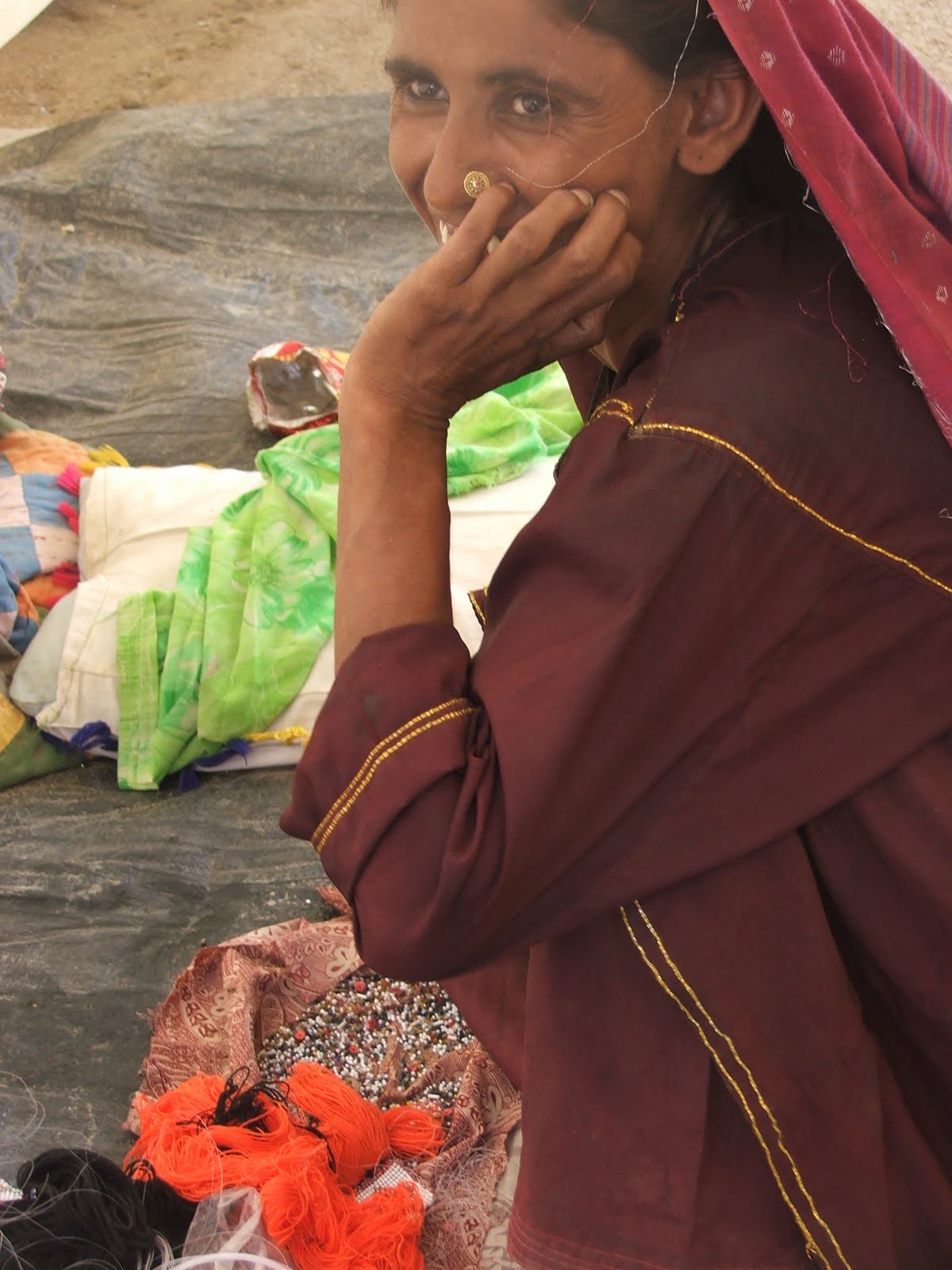
• Name: Sher Bano
• Age: In 30s
• Gender: female
• Education: nil (can’t even speak and understand Urdu. Translator was her husband.)
• Marital status: married with four kids ( two boys n two girls)
• Husband’s name: Arbab Ali ( farmer)
• Which city do you belong to?
Dado (khacha ilaqa)
• How long have you been here? How did you got to know about the upcoming flood? How did you get here?
We are here from 10 days in camp. When flood came before we did not knew about it. Than me my husband’s rent a boat on our own and came to dryer place and then we came to Karachi from bus. All this coasts about 3000 Rs/-. Our land lord gave us 6000 rupees when we were coming to Karachi.
• What do you used to do there? Are you educated?
I use to do house hold work and some crafts like karhai, stitching and making rallies for my self and my family.
• What do you miss the most? What was special about your hometown, home?
My elder boy, he is 16yrs old and he is there to look after are cattle’s. We had 8 goats and 3 cows. One of our cows died because of flood. The fresh vegetables are the best thing about our village. My husband was farmer and he use to work for our waderah and brings fresh vegetables every day to cook food.
• How many family members? Are all fine, in good health?
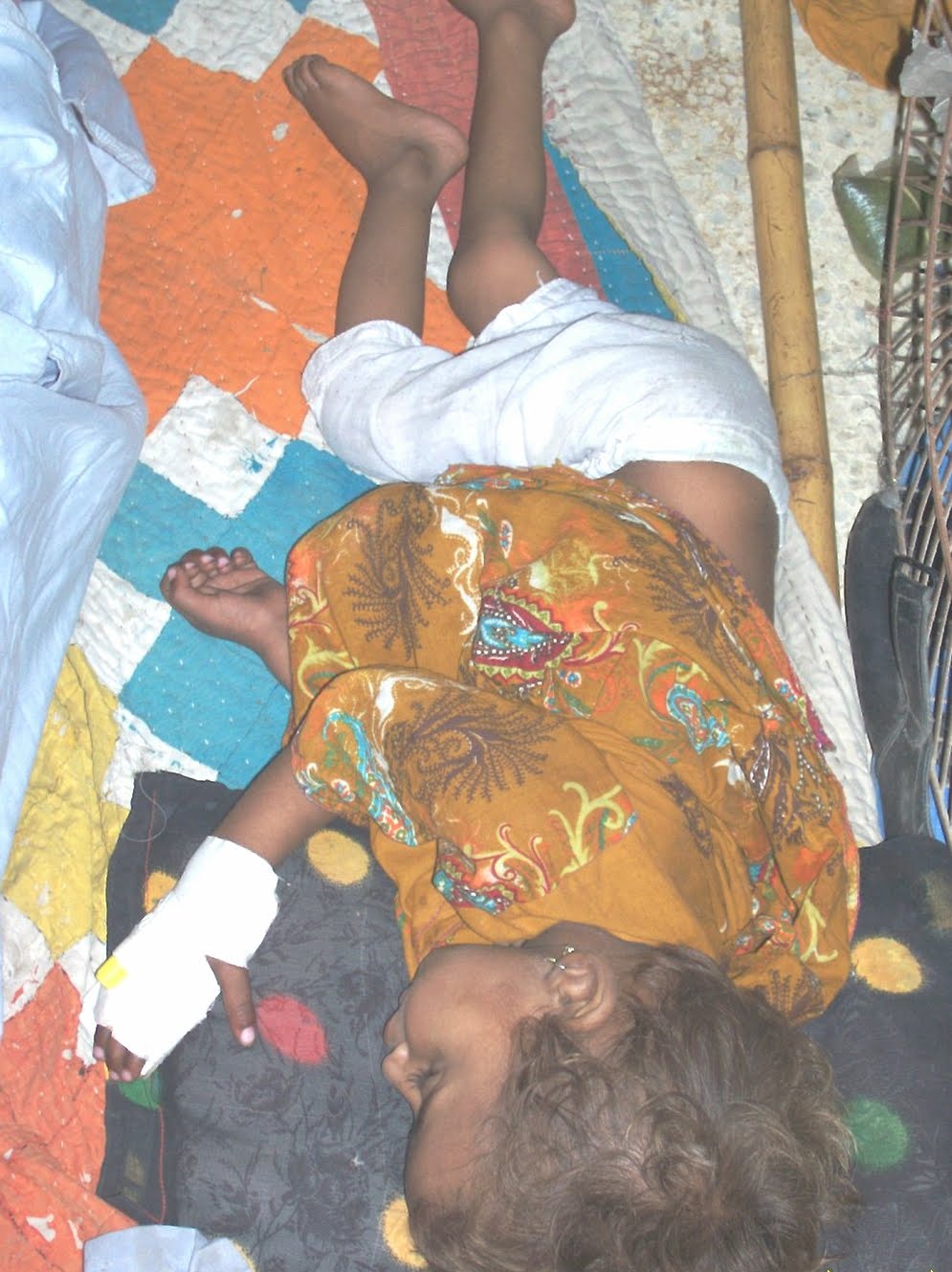
We are 6 family members, me my husband and our four kids. My youngest daughter was having diarrhea and cold. Now she is fine as Dr gave medicine to her.
• What belongings do you still carry from your city? What stuff do u misses the most and cherish the most?
My beads and sewing kit. And our rallis, some clothes and few utensils. My sewing machine and that’s all.
• How do you all spend your day? What do you like the most and not like here at all?
I most of time spend my time in tent doing some work like, making tea and looking at children. Some time I do some beads work as I get bored by sitting idle. I like the medical camp over her. Drs Over here are very good, they really took good care of daughter and workers also. They give us two times cooked food in our tent and also give respect to us. But they don’t give us food for our kids. My youngest daughter can’t eat spice food and we are also not use to it. My husband brings milk and tea and biscuits for our daughter from his own money. Officials didn’t provide cooking facilities I just make take tea by firing woods. Other wise water facilities and medical facilities are good.
• Do you interact with people around you? Is there any sort of groups here?
No I don’t, I can’t speak and understand except Sindhi. But my husband told me that makkarani people made groups over here. As some of the officials are makkarani so they give milk and other stuff to them.
• What have you learnt here? Any new experiences?
To be patient and calm person. Because we are not strong enough to fight with others for relief. So if we have patience we can wait for our turn. We have to wait for food when worker will distribute us? And to use limited amount of water for washing, drinking and bathing.
• What will you do, if you would have to live in Karachi, and if you go back? Will there be any change in your profession?
It depends on time and situation, the only earning member of our family is my husband. If government provides us proper homes we will think to live here. But to me if my husband needs my helping hand I can only do stitching and other karhai stuff.
• You saw how differently people live here at Karachi, the girls and the boys are educated alike, Will you educate your children when you go back?
My children were getting education over there. But it was a government school. I and my husband want our children to good educated citizens of Pakistan. As both of us our totally uneducated we are dependable to our waderah. That’s we don’t for our next generation.
• What role did the govt. play? Do you think you will vote the same people you voted last time?
As we came to Karachi on our own, I think government should provide free transportation facilities. But this camp is also running by govt. and they are doing pretty good job. But mostly NGOs are doing better and efficient work.
• If we provide you any work, will you use your skills to work with us?
Yes I would love to do work with you guys. As I can do handy crafts but I never did at professional level. Whatever I can do I am ready to work with you guys by providing my skills.


 The volunteer women's at the camp provided by the government Miss Amina jafferi, Anees fatima and Aftab nafees.

 In 3rd visit of Suchal goth camp I found very bad condition of sanitation and food condition